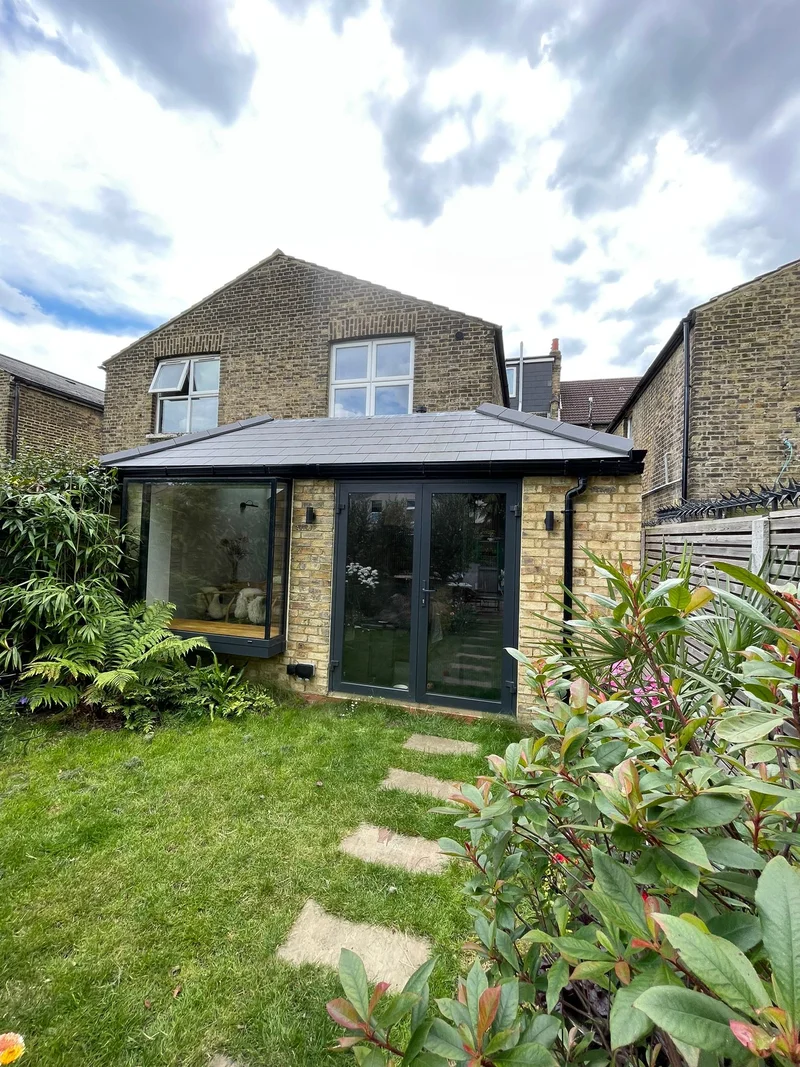


Over the years, we have built house extensions in many shapes and sizes, from simple single-storey additions to complex basements and double-storey builds. The best option for your home isn’t just about gaining extra square metres – it’s about how well the extension suits your property type, planning constraints, budget, and long-term plans.
In practice, the most successful extensions are those that solve specific problems:
- Cramped kitchens
- Poor access to the garden
- Lack of bedrooms or bathrooms
- Or awkward, chopped-up layouts.
A well-designed project can also improve energy performance, futureproof your home for changing family needs, and increase its market value.
Start with Your Home’s Shape and Context
Before deciding on an extension type, it’s crucial to consider the shape, style, and position of your home. These factors will strongly influence where and how you can build, as well as how much benefit you’ll gain from the project.
Beyond the building itself, your wider context also matters:
- Plot size and shape: determines how deep or wide you can build without sacrificing all outdoor space.
- Orientation: affects where you’ll get the best natural light – south- and west-facing elevations are usually ideal for main living areas.
- Access for builders and materials: side or rear access can reduce disruption and cost; tight urban plots can push prices up.
- Neighbouring buildings and boundaries: influence overlooking, overshadowing, and how easy it will be to gain planning approval.
A well-chosen extension type works with your existing home rather than forcing an awkward or overly expensive solution.

Single-Storey Rear Extensions
Once you’ve understood your property’s basic constraints, a logical next step is to consider the most common option: the single-storey rear extension. These are one of the most popular and straightforward ways to add practical living space.
A single-storey rear extension sits at the back of your home like a natural push outward into the garden. It’s built on one level, usually opening straight from the kitchen or living room. Picture your current back wall moved further into the garden, replaced with wide glazing and a brighter, more generous room behind it.
What They Are Best For
A rear extension usually projects out into the garden from the back of the house. It’s ideal for:
- Creating a larger kitchen or kitchen-diner
- Forming an open-plan family or living area
- Adding a dedicated dining space with doors onto the garden
- Improving access and views to outdoor space
- Introducing a utility room, boot room, or ground-floor WC
Because they sit at ground level and often replace or expand existing lean-tos or outhouses, rear extensions tend to be less structurally complex than multi-storey builds. They’re especially effective for homes where the current kitchen or living room feels cramped, dark, or disconnected from the garden.
Key Design Considerations
Good design focuses on how the new space connects to the existing rooms. Knocking through internal walls can open up compartmentalised layouts, but may require steel beams or other structural support. Where possible, aligning circulation routes so you’re not constantly walking through the main cooking area improves day-to-day usability.
Light is a major factor. Large sliding or bifold doors and rooflights help bring in natural light, especially if the extension is deep. Consider:
- Rooflights or lanterns over the centre of the plan or working areas
- Fixed “picture” windows for framed views of the garden
- Window seats or built-in benches under glazing to make the most of outlook
You’ll need to balance the size of the extension against the remaining garden. Going too deep can dominate outdoor space and may raise planning concerns, especially in terraced streets or where neighbours’ windows are nearby. Future buyers often value even a modest, well-designed garden more than a few extra internal square metres.
Keeping the roofline and materials sympathetic to the existing building generally improves your chances with planning departments and creates a more coherent look. In some cases, though, a contrasting contemporary design – such as a flat-roofed, zinc-clad addition to a period home – can be successful if it’s high quality and sensitively detailed.
Planning and Cost
Many single-storey rear extensions fall under permitted development rights if they meet certain limits on height, depth, and distance from boundaries. This can reduce the need for a full planning application, although building regulations approval is still required.
Approval under larger home extension schemes or prior approval processes may allow slightly deeper projections in some areas, but neighbour consultation and impact on light must be considered.
Costs vary depending on size, specification, and glazing choices, but rear extensions usually offer a strong balance between impact and affordability. They are a common “first step” for families needing more space because:
- They can often be built while much of the house remains usable.
- They frequently transform the way the ground floor functions.
- They tend to appeal strongly to future buyers, especially when combined with a modern kitchen.

Side-Return and Side-Infill Extensions
Once you’ve considered extending directly into the garden, it’s worth assessing whether you can reclaim underused side space. Side-return and side-infill extensions are particularly well suited to period properties with narrow side passages.
A side-return extension fills in that narrow, often forgotten strip of land running along the side of many Victorian and Edwardian homes. Imagine turning the alley where bins currently live into a warm, usable space that widens your kitchen and lifts the whole ground floor. It’s built by roofing over that gap and knocking through the original wall so the interior expands sideways.
What They Are Best For
In many Victorian and Edwardian homes, a slim strip of land runs alongside the rear part of the house. Filling in this area can:
- Widen a narrow galley kitchen
- Improve access and circulation between front and back rooms
- Create a better connection to the garden
- Unlock more flexible layouts for dining and living spaces
- Provide space for utility areas, breakfast nooks, or extra storage
By using space that is often little more than a storage corridor or bin alley, these extensions can add valuable square footage without sacrificing much garden depth.
Key Design Considerations
Because side-return extensions sit close to boundaries and neighbouring windows, daylight is a major design focus. You’ll often be building over or near existing windows on the original side wall, so adding rooflights, glazed strips, or partial glazing to the new roof helps avoid dark, tunnel-like rooms.
Popular strategies include:
- Continuous bands of rooflights along the side infill
- Partially glazed roofs or “slot” rooflights between old and new structures
- High-level glazing (clerestory windows) to pull light deeper into the plan
Careful planning of structural openings is essential when removing sections of external wall to merge the new and old spaces. Thought must also be given to drainage and existing services that may run along the side passage – these may need diverting, which can impact cost and programme.
Planning and Cost
Side-return extensions can sometimes be built under permitted development, but rules on width, height, and proximity to boundaries apply and can be stricter in dense terraces or conservation areas. Where a side passage is very narrow or directly abuts a neighbour’s window, planners may request design changes to minimise overshadowing.
The narrow working area can make construction and access trickier, adding to labour costs. Materials may need to be carried through the house if there’s no alternative route, which can also increase internal protection and cleaning costs.
Overall, though, side-return and side-infill extensions often provide excellent value because they make every metre of available footprint work harder without a major loss of garden. In many urban terraces, they are the key to turning a cramped kitchen into a functional, light-filled living hub.

Wraparound Extensions
For homeowners wanting a more wholesale transformation of the ground floor, wraparound extensions are a natural evolution from simple rear or side projects.
A wraparound extension joins a rear extension with a side-return extension to form an L-shaped build wrapping around the back corner of your home. Picture the house gaining a whole new wing that stretches sideways and outward, creating a deep, open-plan space that feels like a modern pavilion stitched onto a period shell.
What They Are Best For
A wraparound extension typically fills in the side-return while also projecting into the garden. This approach can:
- Create a large, open-plan kitchen, dining, and family zone
- Reconfigure circulation to make layouts more logical and efficient
- Allow for utility rooms, pantries, or ground-floor WCs without compromising main living areas
- Provide long, flexible spaces ideal for modern family living and entertaining
- Improve sightlines so parents can supervise children in the garden from the kitchen or living area
Because they can substantially increase the footprint, wraparound extensions are one of the most transformative options for traditional terraced and semi-detached homes.
Key Design Considerations
The main design risk is ending up with deep, dark interiors. As you extend to both side and rear, you may remove multiple external walls and original windows. Incorporating generous rooflights, clerestory glazing, and wide glazed doors is essential to pull light into the centre of the plan.
Zoning within the open space helps it feel coherent rather than like a single, cavernous room. Changes in:
- Floor finish (for example, tiles in the kitchen, timber in the living area)
- Ceiling height (lowered ceilings over utilities, higher in main living zones)
- Lighting (task lighting in kitchens, softer lighting in seating areas)
- Partial partition walls, shelving, or island units
can subtly define cooking, dining, and seating areas without losing the sense of openness.
Structural complexity is usually higher than with a simple rear extension, as multiple walls may be removed or altered and steel frames introduced. Coordination between structural engineering, services routes, and detailed interior layouts is crucial to avoid intrusive beams or columns.
Planning and Cost
Wraparound extensions rarely qualify as permitted development because they change both the side and rear profiles and can significantly alter the appearance of the property. A full planning application is usually required, with careful attention to neighbour impact, overshadowing, and overall scale.
Local design guidance may limit how far you can project at the side and rear, and planners will assess whether the extension is subordinate to the original house or visually over-dominant.
They generally cost more than single rear or side-return extensions due to their size and structural demands, but the functional gains can be substantial – especially for growing families wanting a central hub space that accommodates cooking, dining, homework, and relaxation in one well-planned area.

Double-Storey Extensions
Once the ground floor has been considered, many homeowners look upwards.
A double-storey extension is built over two floors, rising from the ground level and continuing up to the first floor. Think of it as adding a new block to one side or the rear of your house – one that enlarges your kitchen or living area below and gives you extra bedrooms or bathrooms above. It looks and feels like the house always had that extra wing.
What They Are Best For
A two-storey extension is typically used to:
- Create an enlarged kitchen or living area on the ground floor
- Add one or more bedrooms upstairs
- Provide an extra bathroom or en-suite
- Improve circulation and storage with better landings, wardrobes, or dressing areas
- Achieve a better balance of bedroom-to-bathroom ratios, which is particularly attractive to families and future buyers
For households needing both living and sleeping space, it can be a more cost-effective way to expand than separate single-storey and loft conversions, as much of the cost of foundations and the building shell is shared.
Key Design Considerations
Externally, the upper storey needs to integrate well with the existing roofline, windows, and materials to avoid a “bolt-on” look. Aligning window heads, sill heights, and roof pitches with the original building usually results in a more harmonious elevation.
Internally, you’ll need to think about how the first-floor layout aligns with existing rooms and circulation. That may mean:
- Extending or repositioning the landing
- Moving doorways or internal partitions
- Rebalancing bedroom sizes to avoid dark, awkward leftover spaces
Privacy and overlooking become more significant with two-storey additions. Window placement, use of obscure glazing in bathrooms, and the distance to neighbouring properties will be scrutinised in planning. Sometimes, a slight set-back or step-down in the extension can also help mitigate perceived mass and overshadowing.
Planning and Cost
Double-storey extensions are more structurally complex than single-storey ones, as they must support upper-floor loads and tie into existing floors and roofs. However, once the foundations and basic shell are in place, adding the upper floor often works out cheaper per square metre than building the same area on a separate project.
Planning permission is commonly required, with stricter rules on height, massing, and neighbour impact than for single-storey work. Roof design – hipped vs gabled, ridge height alignment, and dormer placement – will all factor into the decision.
Well-designed two-storey extensions can dramatically increase the perceived scale and comfort of a home and support a higher valuation, particularly where a property moves from, for example, a three-bedroom to a four- or five-bedroom house with adequate bathrooms.

Loft and Dormer Conversions
If you can’t easily extend outwards or upwards with additional storeys, the unused space inside your existing roof can be an efficient alternative.
A loft conversion transforms the empty roof space into a usable room. Imagine climbing your staircase and stepping into what used to be dusty rafters, now turned into a bright bedroom, office or studio carved neatly within the slopes of your existing roof.
What They Are Best For
A well-designed loft conversion can provide:
- A main bedroom with en-suite and views over the garden or street
- Extra bedrooms for children or guests
- A home office, studio, or hobby room tucked away from ground-floor noise
- Storage integrated into eaves and sloping ceilings, reducing clutter elsewhere
Because they build upwards rather than outwards, lofts preserve garden space and can often be completed with less disruption to the main living areas, especially if access is via an existing or newly formed stair from the landing.
Dormers and Design Options
Simple “rooflight” conversions add windows to the existing roof without changing its shape, best suited where there is already enough head height in the central part of the loft. These can be visually discreet and more straightforward to approve.
Dormer conversions extend the roof vertically to create more usable floor area and standing height, especially towards the rear. They can be:
- Full-width rear dormers, maximising internal headroom
- Smaller dormers aligned with existing windows
- Side dormers to enable new stairs to meet head-height requirements
L-shaped dormers can be used on some period properties with rear outriggers, maximising space but requiring careful structural and design work.
Insulation, ventilation, and fire safety are critical. Dormer design must integrate with existing roof coverings, and escape windows or protected stair routes may be needed depending on the number of floors.
Planning and Cost
Many loft conversions, especially modest rear dormers, fall under permitted development as long as they stay within volume limits and meet rules on height, materials, and placement (for example, set back from eaves). Front-facing dormers and conversions in conservation areas or on listed buildings are more tightly controlled and frequently require full planning permission.
Costs depend on the complexity of structural alterations and insulation, as lofts must meet modern thermal and fire safety standards. Installing new stairs, reinforcing the loft floor, and relocating services (such as water tanks or boiler flues) can also affect budgets.
Despite this, loft conversions are often one of the more cost-efficient ways to add a full additional bedroom or home office, and in many markets are highly attractive to buyers.
Garage and Over-Garage Extensions
If your loft is already in use or not suitable, the next area to consider is often the garage. Garages are frequently underused or used mainly for storage, making them prime candidates for conversion or extension.
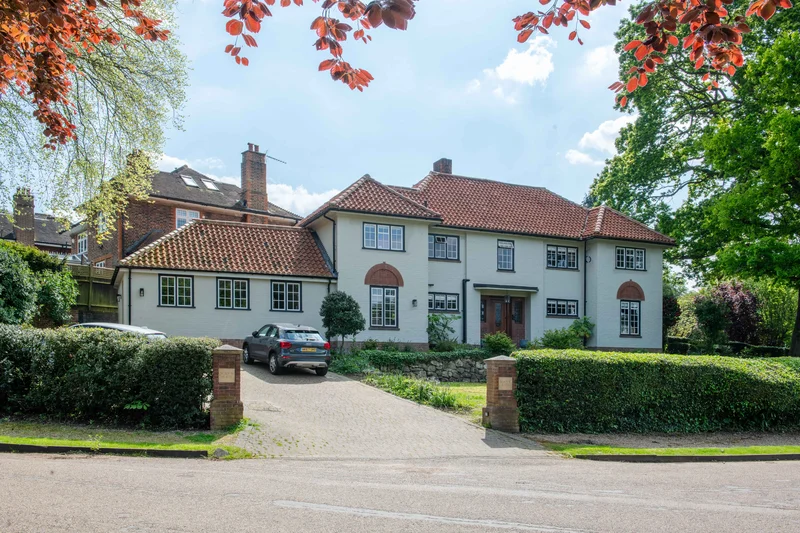
A garage conversion turns the existing garage shell into a warm, insulated room. Picture the garage door replaced with a proper wall and window, and the cold concrete box transformed into a playroom, bedroom, office or utility – without changing the footprint of your home.
An over-garage extension builds a new room directly above your existing garage. The garage stays at ground level; the new space perches above it like a seamless extra storey. It’s often used for bedrooms or studies that sit neatly above the driveway side of the house.
Garage Conversions
Converting an existing integral or attached garage can quickly create:
- A ground-floor bedroom or guest suite
- A playroom or second living area for a growing family
- A home office or hobby room with separation from main living spaces
- A utility or boot room to help manage clutter and outdoor gear
Because you’re working within an existing shell, it can be a cost-effective way to gain an extra room – though floors, walls, and roofs often need upgrading for insulation and damp-proofing. Careful detailing is required where the old garage door is removed to ensure the new wall blends with the existing façade.
Building Above a Garage
If the existing garage is structurally suitable, building a room (or rooms) above it can add bedrooms, a study, or a bathroom without taking garden space. This is common where there is an attached side garage on a semi-detached or detached home.
You’ll need a structural engineer to confirm whether the existing foundations and walls can support another storey or whether strengthening or rebuilding is necessary. In some cases, demolishing and rebuilding the garage with a new upper floor can be more straightforward than trying to adapt inadequate foundations.
Planning and Practicalities
Planning permission may be needed, especially if you are altering the external appearance substantially or impacting parking provision. Losing off-street parking can be a planning concern in areas where on-street parking is already limited or controlled.
Fire separation, soundproofing, and access arrangements are critical technical considerations, particularly if the garage is on a boundary or shares a wall with a neighbour. Internally, you’ll also want to ensure the new space over or instead of the garage has a logical relationship to existing rooms and doesn’t feel isolated.
Basement Extensions
When you’ve explored options above ground and found them limited by plot size or planning policy, basement extensions may come into play.
A basement extension creates new floor area beneath your home. Builders dig down under the main footprint or garden to form a lower-ground level. Imagine stepping downstairs into a calm, private space carved into the ground – ideal for cinemas, gyms, guest rooms or storage – while the house above remains unchanged in shape.
What They Are Best For
In high-value, space-constrained locations where lateral and upward extension is difficult, basements can provide:
- Family rooms or media rooms away from street noise
- Additional bedrooms with light wells and outdoor access where possible
- Gyms, spa areas, or pools
- Utility rooms, wine stores, and general storage
- Home cinemas or hobby spaces that benefit from lower natural light levels
They’re particularly common in dense urban areas where plots are tight and planning controls limit above-ground changes, but can also be used in suburban homes to create “hidden” space with minimal impact on the streetscape.
Design, Engineering, and Disruption
Basements are among the most technically challenging extensions. They require:
- Careful structural engineering to underpin existing foundations
- Robust waterproofing systems (“tanking” or cavity drain membranes)
- Detailed drainage and sump pump strategies to manage groundwater
- Adequate ventilation and air quality measures
- Thoughtful design of light wells, courtyards, and stair access to avoid creating dark, disconnected spaces
Construction is often slow and disruptive, with excavation, heavy plant, and spoil removal to manage. Neighbouring structures and ground conditions must be considered carefully to prevent movement or damage. In tight urban sites, some councils impose strict construction management conditions and limits on working hours.
Planning and Cost
Basement works are generally expensive per square metre due to excavation, structural work, and waterproofing. Planning permission is usually required, and some local authorities have specific basement policies limiting depth, extent, or the presence of habitable rooms below ground.
They tend to make the most financial sense in prime locations where the uplift in property value justifies the investment, or where alternative extension options are extremely limited. For owners intending to stay long term, basements can also provide lifestyle benefits that aren’t easily achievable elsewhere in the property.

Orangeries vs Conservatories
Glazed additions are a popular way to create light-filled garden rooms, but they don’t all perform the same. Orangeries and conservatories are both glazed additions, yet they behave quite differently as living spaces.
Orangeries
An orangery is a solid-walled, brick-based extension with a lantern roof that sits off the rear or side of your home. It feels like a proper room, with deep walls and a central roof light that floods it with sun. Visually, it behaves like a refined halfway point between a full extension and a garden room.
An orangery typically has:
- More solid wall area than a traditional conservatory
- A solid or partially solid roof with one or more glazed lanterns
- Large windows or glazed doors to the garden
- Better opportunities for insulation and integrated lighting
This configuration offers better thermal performance and integration with the main house, making orangeries feel like true rooms that can be used year-round. They work well as dining spaces, secondary living rooms, playrooms, or garden rooms that bridge indoor and outdoor space.
Architecturally, orangeries can also be detailed to complement period facades or form a contemporary “pavilion” aesthetic, depending on your preferences and planning context.
Conservatories
A conservatory sits on the rear of the home as a mostly-glazed structure with a glass or polycarbonate roof. Imagine a bright sunroom that feels almost outdoors, with views on all sides and lightweight framing. It connects directly to the garden, though it shifts more dramatically with the seasons.
Conservatories are usually:
- More extensively glazed to the sides
- Topped with fully glazed or polycarbonate roofs
- Visually lighter but more exposed to temperature swings and glare
They are often cheaper and quicker to install, sometimes available as modular systems, but can overheat in summer and feel cold in winter if not carefully specified. For many homes, they function best as seasonal garden rooms, plant spaces, or sunrooms rather than full-time living spaces.
Modern, high-performance glazing, shading, and proper heating can make conservatories more usable, but these enhancements inevitably increase costs.
Choosing Between Them
If you want a space that feels like part of the main house – usable and comfortable all year – an orangery-style extension or a highly insulated, solid-roof conservatory is usually the better choice. These options tend to add more value and are easier to heat, cool, and furnish.
If budget is tight, you primarily want a light-filled garden room, and you’re comfortable with more seasonal use, a traditional conservatory may be sufficient. Consider local climate, orientation, and whether you’re prepared to invest in shading, ventilation, and quality glazing to keep the space comfortable.

Kitchen Extensions
For many households, the kitchen is the heart of the home, so it’s no surprise that kitchen-focused projects are often a top priority. Kitchens are frequently at the core of extension projects, whether via rear, side-return, or wraparound additions.
Designing Around Light and Flow
The most successful kitchen extensions focus on:
- Natural light: rooflights over the working area, large glazed doors, or picture windows to reduce reliance on artificial lighting.
- Flow: how you move between cooking, dining, and living areas, and in and out of the garden. Ideally, circulation routes should not cut through the main cooking zone.
- Storage: built-in solutions to keep the space clear and functional, including larders, tall cupboards, and concealed utility areas.
- Zones: subtle separation between noisy cooking zones and quieter seating or homework areas, achieved with island units, half-height partitions, or changes in floor finish.
Rather than simply making the room larger, the aim should be to create a better, more efficient layout that works for daily life and entertaining. Think about work triangles, appliance placement, and sightlines to key areas such as the garden or play areas.
Integrating with the Rest of the House
Think about how the new kitchen space connects to existing rooms and the front door. Key questions include:
- Will you walk through the kitchen to reach the rest of the house, or is there an alternative route?
- Does the kitchen sit logically between the entrance, living spaces, and garden?
- Is there a practical journey from storage (such as a utility or pantry) to the cooking zone?
Often, a small amount of reconfiguration – such as moving a doorway, partially opening a wall, or relocating stairs – can make the extension feel far more integrated and avoid dead-end rooms.
Specification choices, such as worktops, cabinetry, and appliances, will significantly influence overall costs, so it’s wise to set priorities early. Decide where to invest (for example, durable work surfaces or high-quality sliding doors) and where to save (such as standard carcasses or simpler tiling) to stay within budget without compromising functionality.
Planning Rules, Permitted Development, and Constraints
By this point, the design possibilities can seem exciting – but they all exist within a regulatory framework. Understanding planning rules from the outset helps you avoid wasted time and unrealistic designs.
Permitted Development Basics
In many cases, you can build certain types of extensions without a full planning application under permitted development rights, provided you meet specific criteria on:
- Maximum height of the extension
- Depth of projection from the rear wall
- Distance from boundaries
- Roof shape and pitch
- Materials that are similar in appearance to the existing house
- Overall increase in roof volume (for lofts)
Single-storey rear extensions, some side extensions, and many loft conversions can qualify, but the details are important. Prior approval or neighbour consultation schemes may still apply in some cases.
When Restrictions Apply
Permitted development is more limited or may not apply at all if:
- You live in a flat or maisonette
- Your property is listed or in a conservation area, national park, or other designated land
- Previous extensions have already used up your permitted development allowance
- You are proposing significant changes to the principal elevation (usually the front) or roofline
- Article 4 Directions are in place locally, removing or limiting permitted development rights
Even when planning permission isn’t required, building regulations approval is mandatory to ensure structural safety, fire protection, accessibility, and energy performance. In many cases, you’ll also need party wall agreements if you’re building on or near a shared boundary.
Engaging with local planning guidance and, where appropriate, a planning consultant or architect early on will help shape a realistic, approvable scheme and reduce the risk of costly redesigns.
What Drives Extension Costs
With planning context understood, attention naturally turns to budget. Floor area is only one part of the cost equation. Several other factors have a substantial impact on your total spend.
Specification and Finishes
Higher-end kitchens, bathrooms, glazing, and finishes can easily double or triple the cost per square metre compared with basic specifications. Consider:
- The level of bespoke joinery or fitted furniture
- Choice of flooring, tiles, and worktops
- Type of windows and doors (standard units vs large-span or minimal-frame glazing)
- Heating and cooling options (radiators vs underfloor heating, mechanical ventilation, or air conditioning)
- Integrated lighting, audio, security, and smart home systems
Establishing a clear specification early – ideally with itemised allowances for key elements – helps you control costs and avoid surprises during construction.
Structure and Complexity
Complex structural work drives costs up. This includes:
- Removing large sections of load-bearing walls and creating wide openings
- Installing substantial steelwork or complex frames
- Working around chimneys, awkward rooflines, or existing extensions
- Dealing with challenging ground conditions, high water tables, or problematic drainage
- Building basements or heavily modifying existing foundations
Basements, deep wraparound extensions, and heavily reconfigured layouts will usually sit at the higher end of the cost range. In contrast, simple, box-shaped additions with modest openings and standard details tend to be more economical.
Site Access and Logistics
Poor access can significantly increase labour and time. Narrow side passages, lack of vehicle access close to the site, limited storage, or the need to work entirely from the rear garden all add logistical challenges. These can affect even relatively small extensions.
Common cost-increasing factors include:
- Hand-carrying materials through the house
- Limited delivery times or restrictions on heavy vehicles
- The need for more protective measures inside the home
- Neighbouring constraints, such as shared driveways or tight boundaries
Building in phases, while sometimes necessary for budget reasons, can also be more expensive overall than delivering a well-planned extension in a single project, as you may pay multiple times for site set-up, professional fees, and rework.
Long-Term Value and Resale
A carefully costed and well-designed project should do more than solve today’s problems – it should also support your home’s long-term value and appeal. This is crucial even if you have no immediate plans to sell.
What Typically Adds the Most Value
Extensions that create:
- An extra bedroom (especially if taking the house into a higher “bracket,” such as from two to three or three to four bedrooms)
- Additional bathrooms or en-suites to support family living
- Comfortable, flexible living spaces that feel connected to the garden
- Practical amenities such as utility rooms, good storage, and home office space
tend to be the most attractive to buyers and deliver stronger returns on investment. A well-planned layout that “flows” and feels intuitive can be as valuable as raw floor area.
Potential Value Pitfalls
Certain design decisions can limit value uplift, such as:
- Sacrificing all or most of the garden, leaving little usable outdoor space
- Removing parking or garage space in areas where off-street parking is highly prized
- Creating awkward layouts or rooms only accessible through other bedrooms
- Adding overspecialised spaces that are costly to maintain but not widely useful (for example, elaborate home bars or very niche hobby rooms without flexibility)
- Poor-quality finishes or obvious cost-cutting that makes the extension feel temporary or out of character with the main house
A balanced, well-lit layout with good storage and circulation is usually more valuable than simply maximising floor area. When in doubt, think about how a typical future buyer – such as a family or professional couple – would want to use the space.
Light, Outlook, and Connection to the Garden
Throughout every type of extension, one theme consistently separates excellent projects from average ones: the quality of light and the relationship to outdoor space. These factors play a huge role in how successful an extension feels day to day.
Avoiding Dark, Boxed-In Spaces
Side-return and wraparound extensions in particular risk blocking existing windows and pushing living spaces deeper into the plan. To counter this, consider:
- Rooflights or lanterns along the side or centre of the extension
- Glazed internal partitions or borrowed-light windows between rooms
- Double-aspect layouts where possible, with windows to both front and rear
- Maintaining or creating internal courtyards or light wells
- Higher ceilings in key areas to improve perceived volume and brightness
Thoughtful placement of openings can transform the feel of the new space and reduce the need for artificial lighting, improving both comfort and long-term running costs.
Strengthening the Indoor – Outdoor Relationship
Large glazed doors, consistent floor finishes from inside to out, and well-designed terraces or patios can blur the boundary between house and garden. Even modest gardens can feel more generous and usable when the extension opens directly onto them.
To make the most of this connection, think about:
- Aligning dining areas with garden views
- Creating level thresholds for step-free access
- Integrating planting beds, outdoor lighting, and seating near the extension
- Providing shelter, such as pergolas or overhangs, so the space is usable in varied weather
Planting, lighting, and outdoor seating adjacent to the extension will increase how often the space is used and enjoyed, making the addition feel like a natural part of everyday life rather than a separate “bolt-on” room.
Conclusion
Choosing the right type of house extension is about more than simply adding square metres. It starts with understanding your home’s shape, planning context, and long-term needs, then matching these to the most appropriate extension type – whether that’s a straightforward rear addition, a clever side-return infill, a transformative wraparound, a loft or garage conversion, or a more complex basement or double-storey build.
The key opportunity is to treat your extension not as an add-on, but as a strategic redesign of how your whole home works. If you approach the project with that mindset – balancing ambition with practicality – you’ll be far more likely to create a space that feels right today and remains a smart asset for years to come.
Need help choosing the right extension for your home?
If you’re weighing up layouts, budgets, planning rules, or simply trying to picture what’s possible, Rapid Bee is here to guide you.
Book a free consultation, and we’ll walk you through the best options for your property, explain what’s realistic for your budget, and map out the next steps if you decide to move forward.