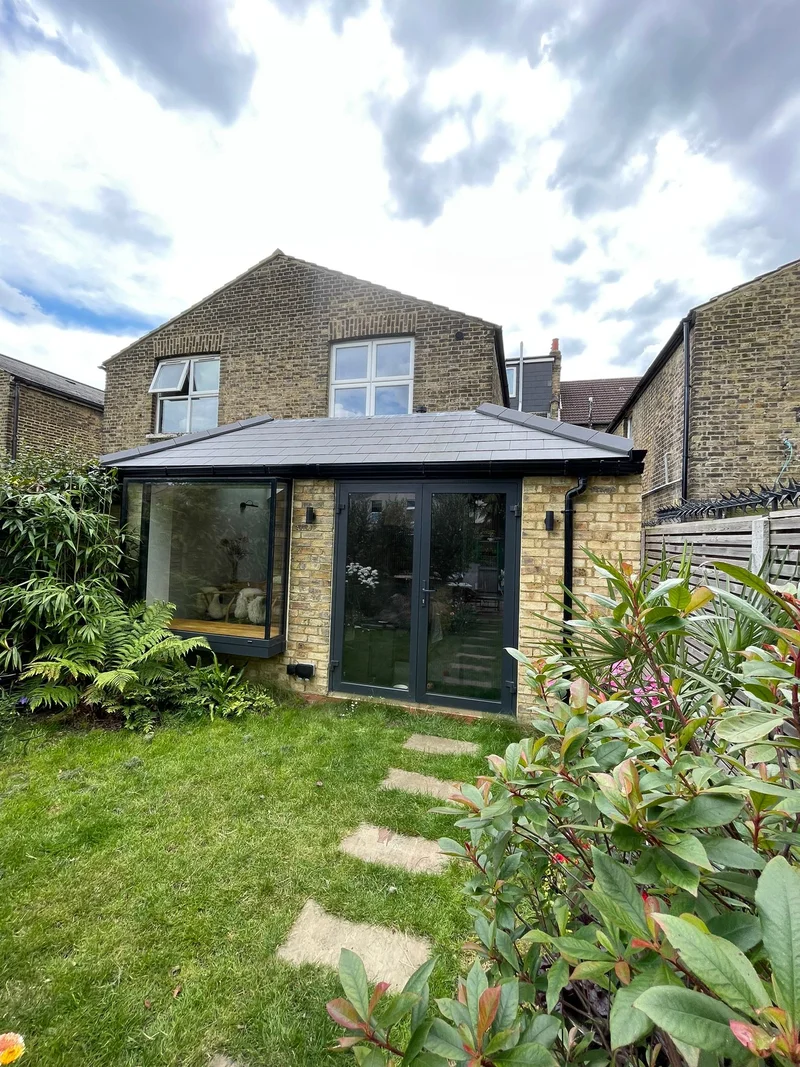


Why Families Outgrow Homes (and How Extensions Solve It)
Most families hit the “space wall” eventually – another child, home working, guests that stay longer than planned.
The first thought is often to move. But stamp duty alone on a £700,000 South London family home is about £25,000 on the GOV.UK rates, before agent fees, conveyancing and removals, so a house extension in South London makes far more sense.
You’re not just buying square metres – you’re buying better flow, privacy, and family comfort.
The trick is choosing the right extension for your property, budget, and borough rules.

Rear Extensions – Add Depth to Daily Living
Best for: Families craving open-plan living and a kitchen big enough for real life.
A single-storey rear extension adds up to 4–6 metres to the back of your home. For most South London homeowners, that means turning a dark galley kitchen into a bright, social space where meals, homework, and catch-ups all happen in one zone.
| Benefit | Real Impact |
|---|---|
| Adds 15–25m² of space | Big enough for kitchen-diner + play area |
| Brings in natural light | Rooflights + glazed doors change energy |
| Usually PD compliant | Faster start, no full planning delays |
Pro Tip: Keep the new roof pitch and materials consistent with your main house – it improves approval odds and resale value.
Average cost: £2,300–£3,400/m² in London (HomeOwners Alliance, 2026)
Timeline: 10–14 weeks

Side Return Extensions – Small Space, Big Payoff
Best for: Victorian and Edwardian homes in Southwark, Lewisham, and Greenwich.
That narrow strip of dead space down the side of your home can become up to 1.5m of usable width across your ground floor – the difference between cramped and comfortable.
Design insight:
- Use continuous flooring to unify old and new areas.
- Add roof glazing to prevent the middle room from losing light.
- Include underfloor heating – pipes are easier to route before the new slab’s poured.
Average cost: £2,300–£3,400/m², the London single-storey rate (HomeOwners Alliance, 2026), usually in the upper half because access is tight
Planning: Usually falls under Permitted Development (PD), but check party wall rights.

Wrap-Around Extensions – The All-In-One Solution
Best for: Families planning long-term or needing flexible zones.
A wrap-around merges rear and side extensions to form an L-shape footprint.
It’s perfect for families juggling multiple uses – cooking, dining, lounging, homework, play, and storage – all in a connected flow.
Design goals:
- Keep at least one glazed corner for natural light.
- Zone spaces subtly: half walls, furniture, or lighting changes.
- Add a boot room or utility area to keep family chaos contained.
Average cost: £2,300–£3,400/m², the London single-storey rate (HomeOwners Alliance, 2026), usually toward the top because of the longer steels
Planning: Needs full permission – councils often review roof height and garden coverage.

Double-Storey Extensions – Add Bedrooms, Bathrooms, Balance
Best for: Families with teens or multigenerational needs.
Extending upwards adds 30–40m² across two floors without sacrificing garden space.
It’s cost-efficient – roughly 60% of the cost of building that same space elsewhere.
Design insight:
- Stack bathrooms for plumbing efficiency.
- Add extra insulation – vertical builds lose more heat.
- Match windows and rooflines with the original house.
Average cost: around £1,900/m² (HomeOwners Alliance, 2026); less per m² than single-storey because the foundations and roof are shared
Planning: Always requires permission. Boroughs like Bromley are stricter on overlooking and materials.

Loft Conversions – Space Without Footprint
Best for: Families needing a teen suite, guest room, or quiet workspace.
Most South London semis and terraces qualify for loft conversions.
With 2.2m of head height and good structure, it’s an affordable way to gain another floor.
| Type | Added Volume | Typical Use |
|---|---|---|
| Dormer | +10–20m² | Bedroom or playroom |
| Mansard | +25m² | Full suite or office |
| Hip-to-Gable | +18m² | Guest or study |
Average cost: £27,500–£75,000, with a dormer averaging about £50,000 (HomeOwners Alliance, 2026)
Planning: Often PD-compliant – no full application needed unless in conservation areas.
Pro Tip: Add storage into eaves before plastering. It costs less and keeps rooms clutter-free.

Annexes and Garden Rooms – Flexible, Future-Proof Spaces
Best for: Families caring for relatives, or those wanting a multi-use zone.
A detached annexe or garden studio can serve as a home office, granny flat, or independent teen space.
They’re ideal if the main house layout won’t stretch further.
Average cost: £25,000–£65,000 depending on size and spec
Planning: Often PD if under 2.5m high and behind the house.
Planning Rules Made Simple (South London Boroughs)
Planning permission trips up many first-timers. Each borough tweaks the national PD framework.
Here’s what you need to know before sketching plans.
| Borough | Key Focus | Typical Pitfall |
|---|---|---|
| Southwark | Prior Approval required for larger rears | Party wall agreements |
| Lewisham | Strong design scrutiny | Glazing ratios & materials |
| Greenwich | Height and garden space limits | Outbuildings counted in volume |
| Bexley | Looser PD rules | Overlooking concerns |
| Bromley | Conservation control | Roof and cladding mismatches |
Our advice: Never start on “probably fine.” We handle drawings, PD checks, and submissions so you never lose time to red tape.
Realistic Budget Planning
Here’s a simple breakdown to plan family extensions smartly:
| Extension Type | Indicative cost (2026) | Build Time | Adds Value |
|---|---|---|---|
| Rear | £2,300–£3,400/m² | 10–14 weeks | Up to 15% |
| Side Return | £2,300–£3,400/m² | 8–12 weeks | Up to 12% |
| Wrap-Around | £2,300–£3,400/m², toward the top | 12–18 weeks | Up to 20% |
| Double Storey | around £1,900/m² | 14–20 weeks | Up to 25% |
| Loft | £27,500–£75,000 | 8–14 weeks | Up to 15% |
Tip: Set aside 10–15% contingency for design tweaks or structural surprises. Budget the professional and statutory fees as a separate line too; we list them in the costs nobody quotes you.
Design for Family Flow, Not Just Floor Space
A great extension isn’t about square footage – it’s about how it feels.
For families, the best designs include:
- A clear “mud zone” (boot room, utility, or storage area).
- Sightlines from kitchen to garden – so you can cook and keep an eye on kids.
- Plenty of natural light; skylights can lift mood and reduce energy costs.
- Built-in storage under stairs, benches, and eaves.
Smart finish choices:
- Hard-wearing flooring (LVT, engineered wood, porcelain tile).
- Matt paints that wipe clean.
- Layered lighting: task, ambient, and accent.
Sustainability and Comfort Built In
Every build we do now looks at energy use, comfort, and future costs.
The right design saves thousands over the years.
What we recommend:
- Insulate to current Part L standards (or better).
- Fit zoned underfloor heating and LED lighting.
- Pre-wire for solar or EV charging – even if you don’t use it yet.
- Ventilate right: stale air ruins even the best design.
Small choices compound into comfort – and real savings.
The Rapid Bee Way: Clarity from Day One
Families hate surprises. So do we.
Here’s how we make projects smooth:
- Consultation: We visit, measure, and design around your lifestyle.
- Design & Planning: We manage drawings, permissions, and neighbours.
- Build: One point of contact, clear timelines, clean sites.
- Aftercare: We check back once the dust settles (literally).
You’ll always know costs, next steps, and completion dates.
FAQs
Do I need planning permission for a single-storey rear extension?
Usually not, if it stays within PD rules (3–4m depth). We’ll confirm based on your address.
Can I live in the house during construction?
Yes – most families do. We phase work and seal areas to minimise disruption.
How long does a typical project take?
8–20 weeks, depending on type and scope.
Will it increase my home’s value?
Yes. A well-designed extension in South London typically raises value 15–25%.
Next Step: Plan It Right the First Time
Your home should grow with your family – not against it.
A good extension gives you breathing room today and flexibility tomorrow.
Book Your Free Family Extension Consultation
We’ll help you design a home that finally fits your life – and your postcode.